The Wellness Advice I Stopped Following
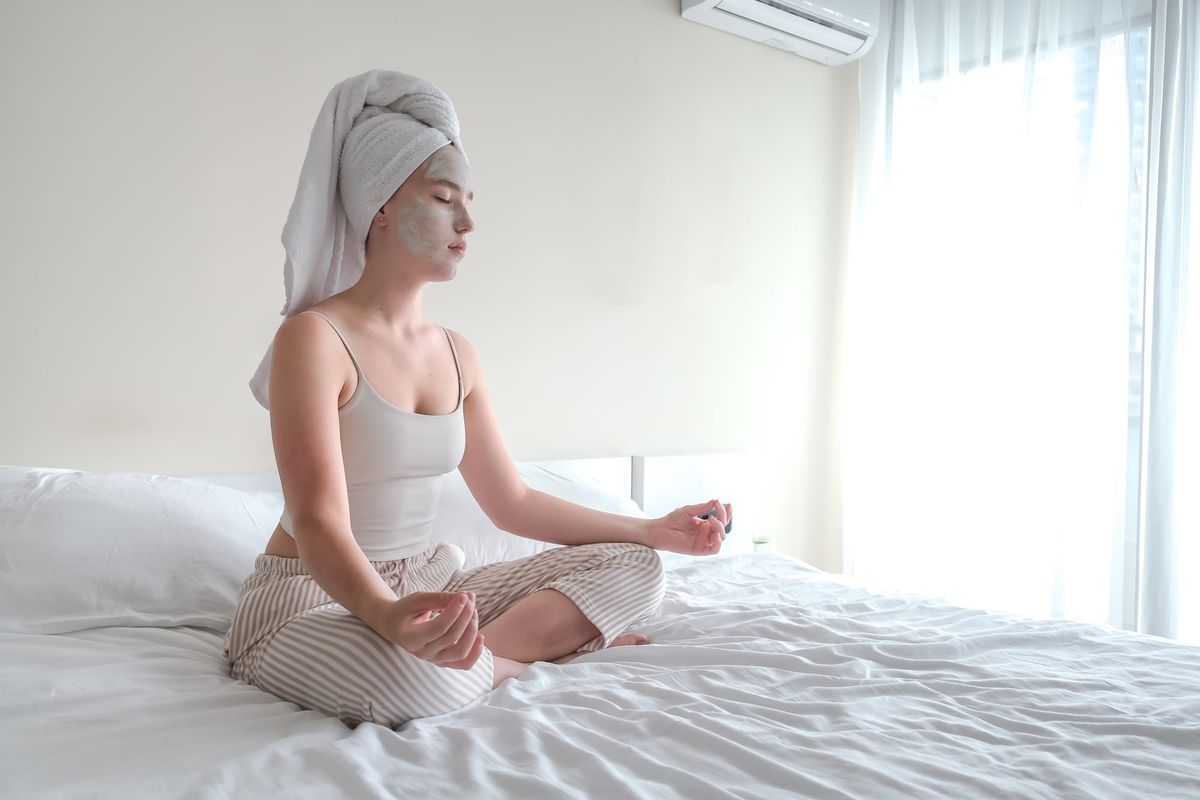
A personal note on letting go of strict routines, food guilt, overtraining, comparison, and the online pressure to become a perfect version of yourself.
There was a time when I collected wellness advice like proof that I was trying hard enough.
I saved morning routines, meal plans, workout schedules, supplement lists, cycle-syncing tips, sleep hacks, productivity rituals, grocery hauls, “what I eat in a day” videos, and every gentle-looking but secretly demanding piece of advice that promised to help me become healthier, calmer, more disciplined, more energized, more balanced, and somehow more beautiful by the end of the week.
At first, it felt inspiring.
There is something hopeful about believing that the right routine might finally make you feel like the version of yourself you keep imagining. The version who wakes up rested, stretches before coffee, eats colorful meals without effort, never craves sugar, works out consistently, drinks enough water, has glowing skin, manages stress gracefully, and goes to bed with a calm mind and a clean kitchen.
But after a while, all that advice started to feel less like support and more like noise.
Instead of feeling more connected to my body, I felt like I was constantly monitoring it. Instead of feeling healthier, I felt guilty. Instead of trusting myself, I kept wondering which rule I had broken, which habit I had missed, and which version of wellness I was failing at now.
So slowly, I began letting go of the advice that made me feel smaller, stricter, more anxious, or less human.
Not because I stopped caring about my health, but because I wanted to care for myself in a way that actually felt like care.
I Stopped Following Routines That Left No Room for Real Life
I used to be very drawn to strict routines, especially morning and evening routines that looked calm, beautiful, and perfectly controlled.
The problem was not that routines are bad. I still love a supportive rhythm, and I think small daily habits can make a real difference. The problem was that I kept trying to follow routines created for someone else’s life, someone else’s body, someone else’s schedule, and honestly, someone else’s energy.
If I missed one step, I felt behind. If I woke up tired, I felt undisciplined. If my morning was rushed, I felt like the whole day had already started wrong.
Now, I prefer routines that can bend.
A good routine, for me, is not a perfect script. It is a set of gentle anchors I can return to, like drinking water, eating breakfast, getting light, moving my body when I can, and putting my phone down before bed when I remember that sleep matters more than one more scroll.
Real life needs flexible care.
Some mornings are soft and slow. Some mornings are toast, dry shampoo, and answering messages while looking for keys. Both are allowed to exist in the same life.
I Stopped Treating Food Like a Moral Test
This might be one of the biggest changes I have made.
For years, I absorbed the idea that food choices said something about my character. A salad meant I was being good. A pastry meant I had “given in.” A light meal meant control. A second helping meant I needed to be careful. Dessert required negotiation, and carbohydrates somehow became suspicious even when my body clearly felt better with enough of them.
I do not want to live that way anymore.
Food is not a moral test.
It is nourishment, pleasure, culture, comfort, energy, memory, and one of the most ordinary ways we care for a body that has to carry us through the day.
I still care about nutrition, deeply. I care about protein, fiber, steady meals, colorful food, digestion, energy, and how food affects my mood and hormones. But I no longer believe that caring about nutrition requires guilt, fear, or constant restriction.
The advice I stopped following is the advice that made me suspicious of my own hunger.
Now I ask different questions. Did I eat enough? Will this meal satisfy me? What can I add to make it more supportive? Am I choosing from care or from fear?
Those questions feel much kinder than asking whether I have been “good.”
I Stopped Believing Every Workout Had to Be Intense
There was a period when I thought exercise only counted if it was hard.
If I was not sweating, sore, out of breath, or proud of how much I had pushed myself, I wondered whether the workout had mattered. Walking felt too gentle. Stretching felt optional. Rest days made me uncomfortable. I treated movement less like a relationship with my body and more like a way to correct it.
Now, I see movement differently.
I love strength training because it helps me feel capable, steady, and connected to my body in a powerful way. I love walking because it clears my head and gives my stress somewhere to go. I love stretching because it reminds me where I am holding tension. I love yoga because it teaches me to slow down and listen.
And I love rest because my body is not a machine.
The advice I stopped following is the advice that made movement feel like punishment.
Exercise does not need to be a consequence of eating. It does not need to be a payment for existing in a changing body. It does not need to be harder than your energy can honestly support.
Movement can build trust instead of shame.
That changed everything for me.
I Stopped Comparing My Body to Someone Else’s Routine
Online wellness can be beautiful, but it can also make comparison feel endless.
You see someone’s breakfast, workout, supplements, skin, body, kitchen, habits, and calm little evening routine, and suddenly your own life feels messy by comparison. You forget that you are seeing a curated moment, not the full truth of someone’s body or day.
I have compared my real Tuesday morning to someone else’s edited highlight more times than I would like to admit.
I have wondered why I was not more consistent, more toned, more glowing, more organized, more naturally disciplined. I have let someone else’s routine make me feel like I was behind in a race I never agreed to enter.
But the older I get, the more I understand that my body does not need someone else’s routine. It needs my attention.
It needs food that supports my energy, movement that fits my season, sleep that respects my limits, and habits that work in the life I actually have.
Comparison pulls us out of our own bodies. Care brings us back.
I Stopped Chasing Every Wellness Trend
There is always something new.
A new supplement, a new morning drink, a new workout method, a new food rule, a new thing to avoid, a new thing to buy, a new habit that apparently explains why we are not yet perfectly well.
I am not against learning. I love learning. I think women deserve good information about their bodies, hormones, nutrition, movement, stress, and health.
But I have become much more careful with trends that create urgency, fear, or the feeling that my body is a problem waiting to be fixed.
Not every trend is meant for every woman. Not every dramatic claim deserves our trust. Not every expensive product is necessary. Not every influencer routine belongs in our homes.
Most of what helps me feel well is still beautifully ordinary.
Eating enough. Drinking water. Walking. Sleeping. Strength training. Getting sunlight. Managing stress honestly. Resting before I break. Paying attention to my cycle. Speaking to myself with less cruelty.
It is not flashy, but it is real.
I Stopped Making Wellness Another Place to Feel Guilty
This is the heart of it, really.
Wellness should not become another thing women use to judge themselves.
We already carry enough pressure around appearance, productivity, aging, food, motherhood, work, relationships, emotions, and whether we are doing enough in every possible direction.
Health should support our lives, not shrink them.
If a piece of wellness advice makes you feel more afraid of food, more disconnected from your body, more guilty for resting, more obsessed with your appearance, or more convinced that you are failing because you cannot maintain a perfect routine, it may not be the right advice for you.
You are allowed to question it.
You are allowed to take what helps and leave what harms.
You are allowed to build a softer version of health.
What I Follow Instead
These days, I try to follow advice that helps me feel more connected, not more controlled.
I trust habits that are realistic, steady, and kind. I trust meals that satisfy me. I trust movement that leaves me feeling stronger or calmer rather than punished. I trust rest as part of health, not a sign that I have fallen behind. I trust my body’s signals more than I used to, even when I do not understand them perfectly.
Most of all, I trust the idea that health is not about becoming a flawless woman with a flawless routine.
It is about learning how to care for the woman you already are.
The tired one. The motivated one. The hormonal one. The hungry one. The strong one. The overwhelmed one. The one who wants a salad. The one who wants pasta. The one who needs a walk. The one who needs a nap.
All of her deserves care.
And that is the wellness advice I am keeping.
With warmth,
Hannah
Don't miss out on future updates!
Join our newsletter to get the latest insights delivered straight to your inbox.