The Small Self-Care Habits That Actually Help on Hard Days
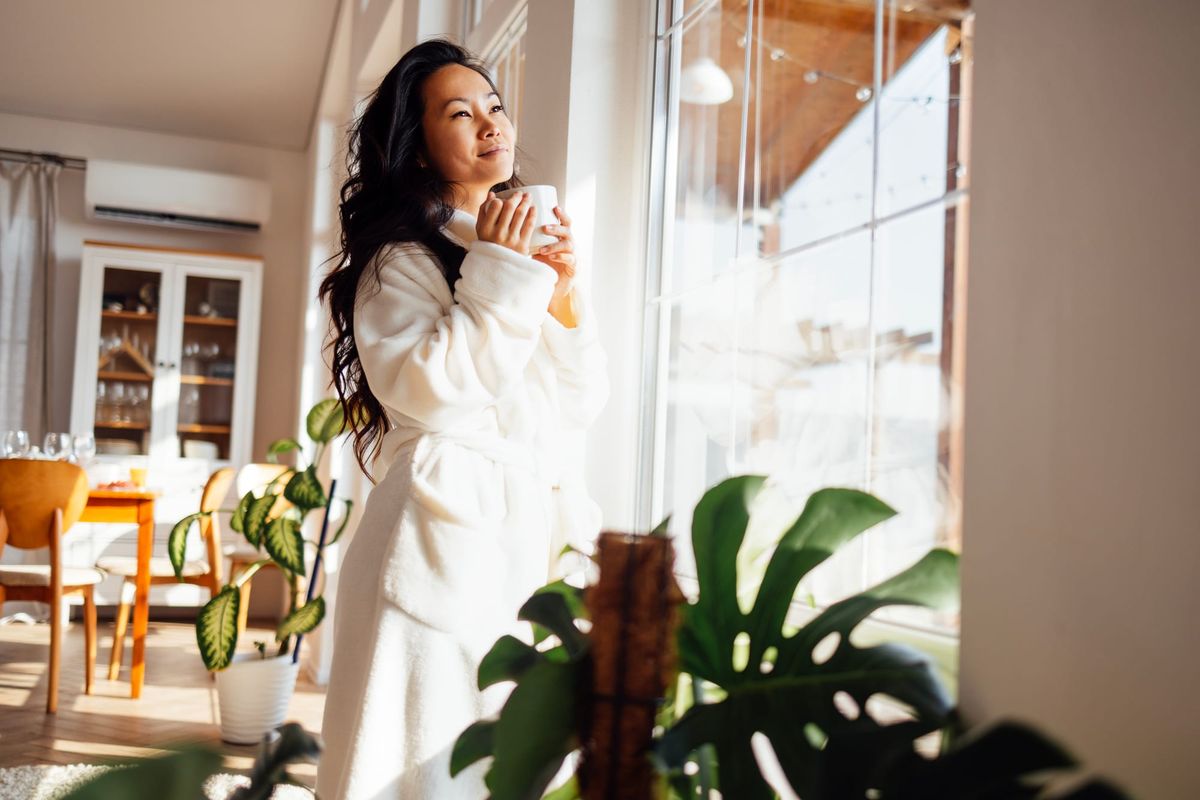
A realistic guide for the days when you feel tired, emotional, bloated, overwhelmed, or a little disconnected from yourself.
Some days, self-care does not look like a peaceful morning routine, a beautiful breakfast, a long walk in perfect weather, or an evening where everything feels calm and softly lit.
Some days, self-care looks much more ordinary than that.
It looks like drinking water because you’ve had mostly coffee, changing into clothes that don’t make you feel trapped in your own body, eating something warm and steady because your mood is starting to wobble, cancelling one unnecessary thing because your nervous system is tired, or putting your phone down because comparison is making a hard day even harder.
I think we sometimes imagine self-care as something pretty, organized, and almost cinematic, but the kind of self-care that has helped me most on hard days is rarely impressive from the outside.
It is simple, practical, and gentle.
It is not about fixing myself into a better mood immediately. It is about giving myself enough support that I do not feel completely abandoned by my own life.
First, I Try to Stop Fighting the Day
When I’m having a hard day, my first instinct is often to resist it.
I want to explain it, fix it, push through it, or shame myself out of it, as if being tired, emotional, bloated, overwhelmed, or disconnected means I have somehow done something wrong.
But some days are simply harder than others.
Maybe I slept badly. Maybe my hormones are shifting. Maybe I am carrying stress I haven’t fully admitted. Maybe I have been too available to everyone else. Maybe my body is asking for rest. Maybe life has been loud for too many days in a row.
Instead of immediately asking, “How do I make this feeling go away?” I try to ask, “How can I support myself while this feeling is here?”
That question feels softer.
It does not demand that I become cheerful, productive, or perfectly balanced before I deserve care. It lets me begin exactly where I am.
I Eat Something That Feels Steady
Food is one of the first places I check in on hard days, because I know from experience that everything feels more dramatic when I am underfed, rushed, or running on caffeine and willpower.
When I feel emotional or overwhelmed, I often ask myself whether I have actually eaten enough, not whether I have eaten perfectly, but whether my body has received real nourishment.
A steady meal does not need to be complicated. It might be eggs on toast, soup with bread, Greek yogurt with fruit and nuts, oatmeal with banana and peanut butter, rice with salmon or beans, or pasta with vegetables and protein.
Sometimes the most caring thing I can do is make a meal that feels warm, filling, and easy.
I used to think hard days required stricter eating, especially if I felt bloated or uncomfortable in my body, but I have learned that restriction usually makes me feel more anxious, not more cared for. My body needs support, not punishment, and a proper meal often helps my mood feel less fragile.
I Choose Clothes That Don’t Argue With My Body
This one may sound small, but it matters so much.
On days when I feel bloated, tender, or uncomfortable in my skin, the wrong clothes can make everything worse. A tight waistband, a stiff fabric, or an outfit that requires constant adjusting can turn body discomfort into a whole emotional story.
So now, when my body feels sensitive, I try to choose clothes that let me breathe.
Soft leggings, a loose dress, a comfortable sweater, a bra that doesn’t dig in, pajamas earlier than usual if the day is already done, anything that helps my body feel less judged and more held.
This is not giving up on looking nice. It is refusing to punish my body with discomfort just because it is having a human day.
Clothes are supposed to fit the body I have today, not the body I think I should have by next week.
I Take a Walk Without Making It a Workout
Walking is one of my favorite hard-day habits because it helps me come back to myself without demanding too much from me.
I do not need to change clothes into a full exercise outfit, track anything, walk fast, or turn it into a fitness achievement. I can simply step outside and let my body move.
A walk helps when I feel tense, foggy, emotional, or stuck in my thoughts. It gives my stress somewhere to go, helps my breathing deepen a little, and reminds me that I am not only a mind trying to manage everything.
Some walks are long and peaceful, but many are short and ordinary. Ten minutes around the block can still help. A slow walk after dinner can still count. Even standing outside for a moment and feeling the air can shift the day slightly.
Hard days do not always need intense movement.
Sometimes they need movement that feels like kindness.
I Reduce One Layer of Noise
When I feel overwhelmed, I often realize there is too much noise around me.
Not always loud noise, though sometimes that too, but digital noise, visual noise, emotional noise, and the constant feeling of being available.
So I try to reduce one layer.
I might turn off notifications, close extra tabs, put my phone in another room, lower the lights, clear one small surface, stop playing background videos, or sit in silence for a few minutes even if silence feels unfamiliar at first.
I do not need to create a perfectly calm home. That is not always realistic. But one quieter corner can be enough to help my nervous system stop bracing.
A hard day becomes harder when everything keeps asking for attention.
Sometimes self-care is simply making the world a little less loud.
I Let Myself Do the Smaller Version
On hard days, I try to avoid all-or-nothing thinking because it usually makes me feel worse.
If I cannot do the full workout, I can stretch for five minutes. If I cannot cook a proper dinner from scratch, I can make eggs on toast. If I cannot clean the house, I can clear the kitchen counter. If I cannot answer every message, I can reply to the one that matters most. If I cannot have a perfect evening routine, I can wash my face and go to bed.
The smaller version still counts.
This has been one of the most freeing lessons for me, because so much of wellness culture makes us feel as if anything less than the full routine is failure. But real life often asks for adaptation, and on hard days especially, lowering the bar can be an act of wisdom rather than weakness.
Sometimes doing one small supportive thing is far better than doing nothing because the “ideal” version feels impossible.
I Stop Making Big Conclusions About My Life
This is a habit I have had to practice.
When I am tired, hormonal, stressed, or emotionally overloaded, my mind can become very dramatic. Suddenly everything feels wrong. I question my routines, my body, my choices, my relationships, my productivity, and whether I am secretly failing at life.
But I have learned not to trust every big conclusion that arrives when I am depleted.
Sometimes I do not need to rethink my entire life.
Sometimes I need food, sleep, a walk, quiet, a shower, or a conversation with someone who makes me feel safe.
Of course, some feelings are important and deserve attention, but I try not to make major decisions from the most exhausted version of myself. I write the thought down, care for my body first, and come back to it when I feel steadier.
A hard day can make everything look darker than it really is.
I Speak to Myself More Gently Than I Feel
On difficult days, kind self-talk does not always come naturally to me.
Sometimes my first thoughts are critical. Why am I so sensitive? Why can’t I handle this? Why do I feel so bloated? Why am I so tired? Why can’t I just be normal today?
But I am learning that I do not have to believe the first voice that appears.
I can choose a gentler sentence, even if I do not fully feel it yet.
I can say, “This is a hard day, and I can move through it softly.” I can say, “My body is asking for care, not criticism.” I can say, “I do not need to fix everything right now.” I can say, “I am allowed to be human.”
That may sound simple, but the tone we use with ourselves matters.
A hard day is heavy enough without becoming cruel to the person living through it.
I Let Rest Be Productive in Its Own Way
There are days when the most supportive thing is not another habit, but actual rest.
Not rest as a reward. Not rest after everything is finished. Not rest that has to be justified by exhaustion so obvious that nobody could question it.
Just rest because I am tired.
That might mean lying down for twenty minutes, going to bed earlier, choosing a quiet evening, cancelling a plan, taking a slow shower, or letting the house stay imperfect for one more night.
I remind myself that rest is not wasted time. Rest is how the body repairs, how the mind softens, and how the nervous system begins to trust that it does not have to stay switched on forever.
Sometimes the bravest thing a woman can do is stop before she breaks.
Hard Days Deserve Care Too
The small habits that help me most on hard days are not complicated.
Eat something steady. Wear comfortable clothes. Take a gentle walk. Reduce one layer of noise. Do the smaller version. Avoid big life conclusions when depleted. Speak kindly. Rest before collapse.
None of these habits erase the difficulty of being human, and they do not have to.
Their purpose is not to make every hard day disappear.
Their purpose is to help me stay connected to myself while the day is hard.
Because I think that is what real self-care is. Not becoming the perfect, glowing, always-balanced version of yourself, but learning how to support the tired, emotional, bloated, overwhelmed, tender, very human version too.
She deserves care.
Maybe especially her.
With warmth,
Hannah
Don't miss out on future updates!
Join our newsletter to get the latest insights delivered straight to your inbox.